ALS (also called Motor Neurone Disease, Lou Gehrig’s disease, or Charcot’s disease) is a sickness that slowly damages the nerve cells that control your muscles. Because of this, the muscles in the body become weaker over time.
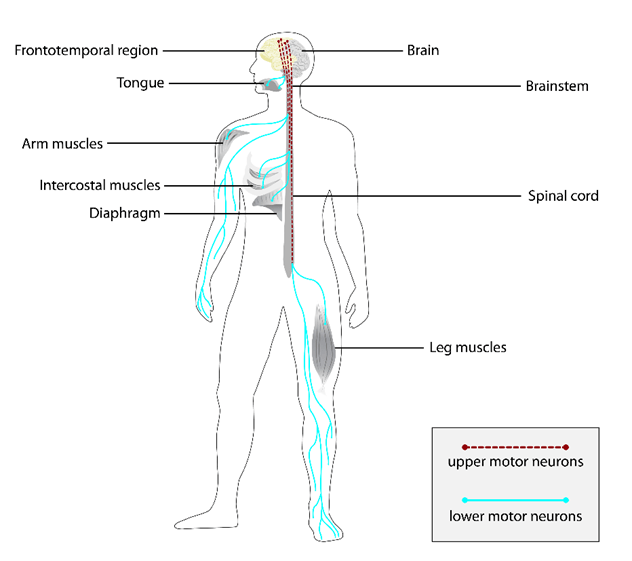
What happens in ALS?
At first, a person may notice:
- Muscle stiffness
- Small muscle jerks or twitches
- Feeling weaker than usual
Later, it becomes harder to:
- Speak
- Swallow food
- Breathe normally
A small percentage of people also have changes in thinking and behavior.
What can ALS cause?
As the muscles weaken, it can lead to:
- Falls
- Trouble breathing
- Pneumonia
- Not getting enough food because swallowing is hard
Who gets ALS?
- It usually starts between 45–75 years old.
- Most cases happen for no known reason.
- About 5–10% come from family genes.
Some things that may increase risk:
- Getting older
- Being male
- Exposure to chemicals or heavy metals
- Head injuries
- Smoking
- Very hard physical activity
How do doctors find it?
There is no single test for ALS.
Doctors look at symptoms, rule out other diseases, and may use tests like:
- EMG (checks nerve and muscle activity)
- Genetic tests
- Brain and spine scans
Treatment
There is no cure, but treatments help with symptoms and improve comfort:
- Walkers or wheelchairs
- Breathing machines
- Feeding tubes if swallowing becomes difficult
- Special devices to help with speaking
- Medicines that slow down the disease a little
Life expectancy
Most people live 2–4 years after diagnosis, but some live longer. Everyone’s case is different.
How common is it?
- About 1–2 people per 100,000 get ALS each year
- Lifetime chance: about 1 in 400
 Sneh Lifescience
Leave a comment